
Frequently Asked Questions About DTF Printing

What Is DTF Printing?
Direct-to-film (DTF) printing is a garment decoration method where full-color designs are printed onto PET film using inkjet technology, coated with adhesive powder, and heat-pressed onto fabric. DTF printing works on cotton, polyester, blends, nylon, denim, and leather. DTF printing does not require pretreatment on any fabric color.
How Does DTF Printing Work?
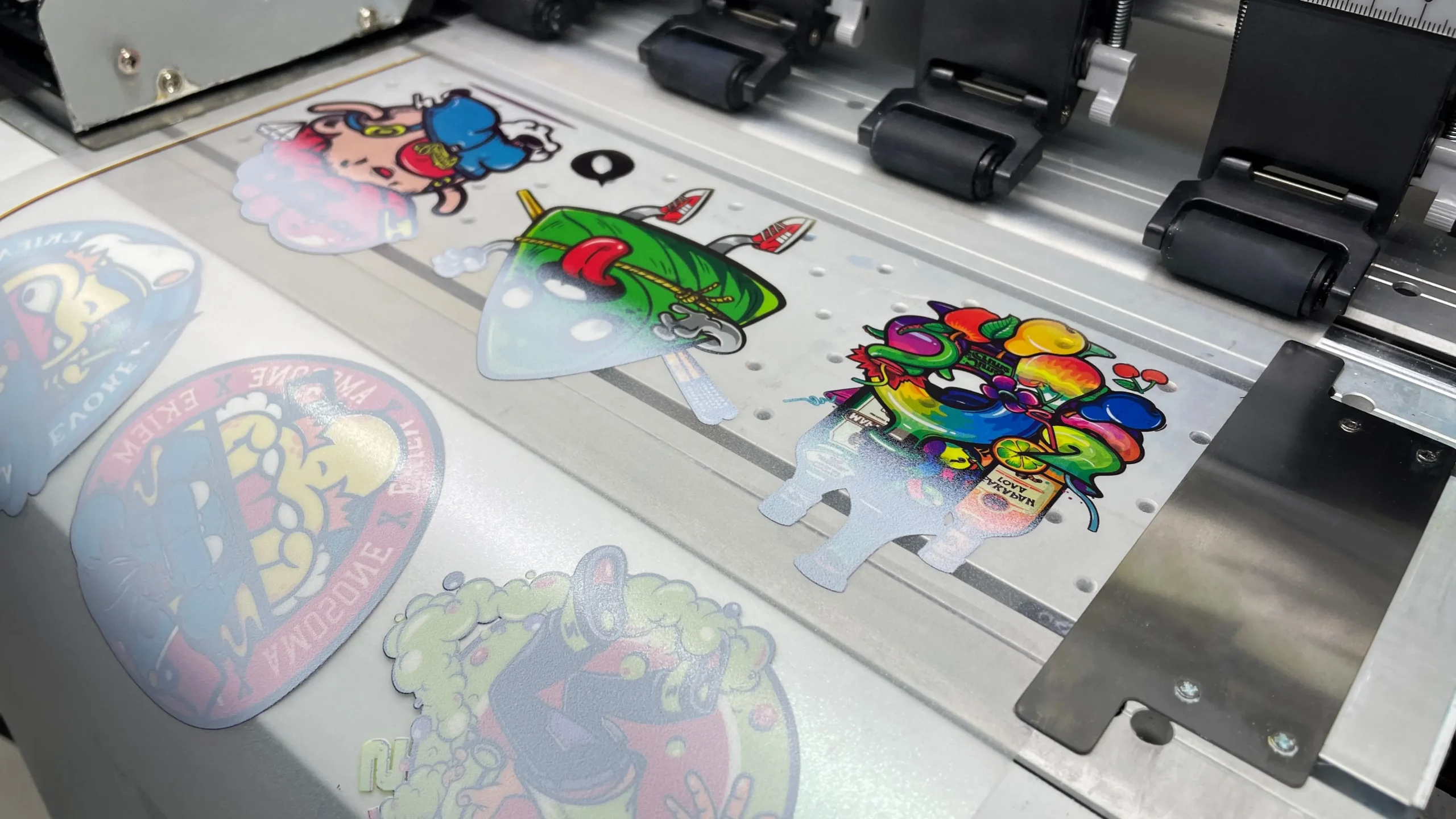
DTF printing follows five steps: print the design onto PET film, apply adhesive powder, cure the powder, heat-press the transfer onto the garment, and peel the film away. The entire process from design to finished garment takes approximately 2-5 minutes per piece depending on equipment.
The DTF printer deposits CMYK and white ink onto the PET film in a single pass. Hot-melt adhesive powder is applied to the wet ink surface either manually or with an automatic powder shaker. The powder is cured at 230-250°F (110-120°C) to melt the adhesive. The cured transfer is then pressed onto the garment at 300-330°F (150-165°C) for 10-15 seconds.
What Materials Can You DTF Print On?
DTF transfers adhere to cotton, polyester, cotton-polyester blends, nylon, denim, leather, canvas, and tri-blend fabrics. DTF printing works on both light and dark materials without requiring separate processes for each color.
Some users also apply DTF transfers to non-fabric surfaces like wood, cardboard, and coated ceramics. Fabric remains the primary use case for standard DTF transfers.
Is DTF Printing Better Than Screen Printing?
DTF printing and screen printing serve different production needs. DTF printing is better for small orders and full-color designs. Screen printing is more cost-effective for large runs of 50 or more pieces. Many print shops use both methods.
DTF printing requires no screens, no color separations, and no minimum order quantities. Screen printing offers specialty inks like puff, metallic, and discharge that DTF cannot replicate. The per-unit cost of screen printing drops significantly at higher volumes, while DTF per-unit cost remains relatively flat regardless of quantity.
How Long Do DTF Transfers Last?
DTF transfers typically last 50 or more wash cycles when applied with correct temperature, pressure, and time settings. Durability depends on ink quality, powder quality, and heat press application settings.
To maximize the lifespan of DTF transfers, wash garments inside out in cold water, avoid bleach, and tumble dry on low heat. Properly applied DTF transfers resist cracking, peeling, and fading through regular use. Using high-quality ink and adhesive powder from a reliable supplier improves long-term durability.
Can You DTF Print on Dark Fabrics?
Yes. DTF printing works on dark fabrics without any additional steps or pretreatment. The DTF process prints a white ink layer underneath the color layer automatically. The white ink base keeps colors vibrant on black, navy, and other dark materials.
The automatic white underbase is one of the main advantages of DTF printing over sublimation printing. Sublimation only works on light-colored polyester fabrics. DTF printing produces the same color output on light and dark garments using the same transfer process.
What Is UV DTF Printing?
UV DTF printing uses ultraviolet-curable inks printed onto a special film with an adhesive layer. UV DTF transfers are peel-and-stick decals that do not require a heat press. UV DTF transfers bond to hard, non-porous surfaces.
UV DTF transfers work on tumblers, phone cases, glass, metal, and plastic. Standard DTF transfers require heat and work best on fabric, while UV DTF transfers are designed for rigid surfaces.
Do You Need a Heat Press for DTF Printing?
Yes. A heat press is required to bond DTF transfers to fabric. The heat press must reach 300-330°F (150-165°C) and apply even pressure across the entire design area. Both clamshell and swing-away heat presses work for DTF application.
A household iron does not provide sufficient or consistent pressure for DTF transfers and is not recommended. Heat press prices for DTF application range from $300 to $1,500 depending on platen size and features. A 15″ x 15″ heat press handles most standard DTF transfer sizes.
What Resolution Should DTF Designs Be?
DTF designs should be set to 300 DPI (dots per inch) for standard quality output. Files at 300 DPI produce sharp text and clean edges on printed transfers. Designs for large-format printing at viewing distances of three feet or more can use 150 DPI.
The file format for DTF designs should be PNG with a transparent background so the RIP software can generate the white ink layer correctly. Avoid JPEG files because JPEG compression removes transparency data. Size the design file to the exact print dimensions before sending the file to the RIP software.
How Do You Store DTF Transfers?
DTF transfers should be stored flat in a cool, dry environment away from direct sunlight. The ideal storage temperature range is 59-77°F (15-25°C) with humidity below 60%. Properly stored DTF transfers remain usable for six months or longer.
Stack DTF transfers between sheets of parchment paper to prevent the adhesive surfaces from sticking together. Avoid storing DTF transfers in areas with high humidity, extreme heat, or direct sunlight. Exposure to moisture can cause the adhesive powder to clump and reduce transfer quality.
What Is the Difference Between DTF and DTG Printing?
Direct-to-film (DTF) printing prints onto transfer film that is heat-pressed onto garments. Direct-to-garment (DTG) printing prints ink directly onto the fabric surface. DTG printing requires pretreatment on dark garments. DTF printing does not.
DTG printing works best on 100% cotton fabrics. DTF printing works on cotton, polyester, and blends. DTF transfers can be printed in advance and stored for later use, while DTG prints are produced one garment at a time. DTG printers generally cost more than DTF printers at comparable print widths.
What Software Do You Need for DTF Printing?
DTF printing requires design software and RIP (Raster Image Processor) software. Design programs like Adobe Photoshop, Adobe Illustrator, CorelDRAW, or Canva create artwork in PNG format with transparent backgrounds. The RIP software controls white ink generation and print settings.
Popular RIP software for DTF printing includes Maintop, Photoprint, and Acrorip. RIP software manages color profiles, white ink density, and print queue settings. Most DTF printers ship with a compatible RIP software license included. Free design tools like Canva work for basic artwork, but Adobe Photoshop and Illustrator offer more control over color and file preparation.
What Is the Difference Between Screen Print Transfers and DTF Transfers?
Screen print transfers use plastisol ink printed onto release paper via traditional screen printing. DTF transfers are digitally printed onto PET film with adhesive powder. The two methods differ in setup, cost structure, and ideal use cases.
Screen print transfers charge per color and require physical screens to be made for each design. DTF prints unlimited colors from a digital file with no screen setup. Screen printing becomes more cost-effective at 50+ pieces with 1-3 colors. DTF is more economical for full-color, short-run, and on-demand orders. Many print shops use both methods depending on the job.
Can You Sublimate on a Black Shirt?
No. Sublimation printing does not work on black shirts or any dark-colored fabric. Sublimation dye is transparent — it becomes part of the fabric rather than sitting on top of it. Without a white surface to reflect color, the sublimation print is invisible on dark garments.
DTF printing is the recommended alternative for dark shirts because DTF transfers include a white ink underbase that makes colors appear vibrant on black, navy, and other dark fabrics. No additional steps or pretreatment are needed.
Can You Sublimate with Regular Ink?
No. Sublimation requires special sublimation ink that converts from a solid to a gas when heated — regular inkjet ink will not work. Regular dye-based or pigment-based ink does not contain the disperse dyes needed for sublimation.
Sublimation ink is formulated with disperse dyes that penetrate polyester fibers at approximately 400°F. Regular ink on sublimation paper produces faded, washed-out results that wash off immediately. If you need full-color prints on dark fabrics or cotton without sublimation ink, DTF transfers are the recommended alternative.